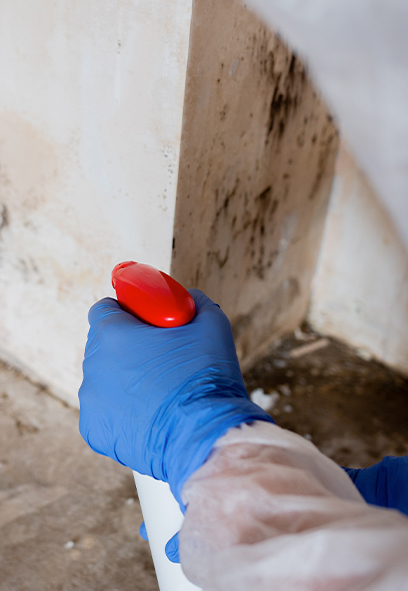
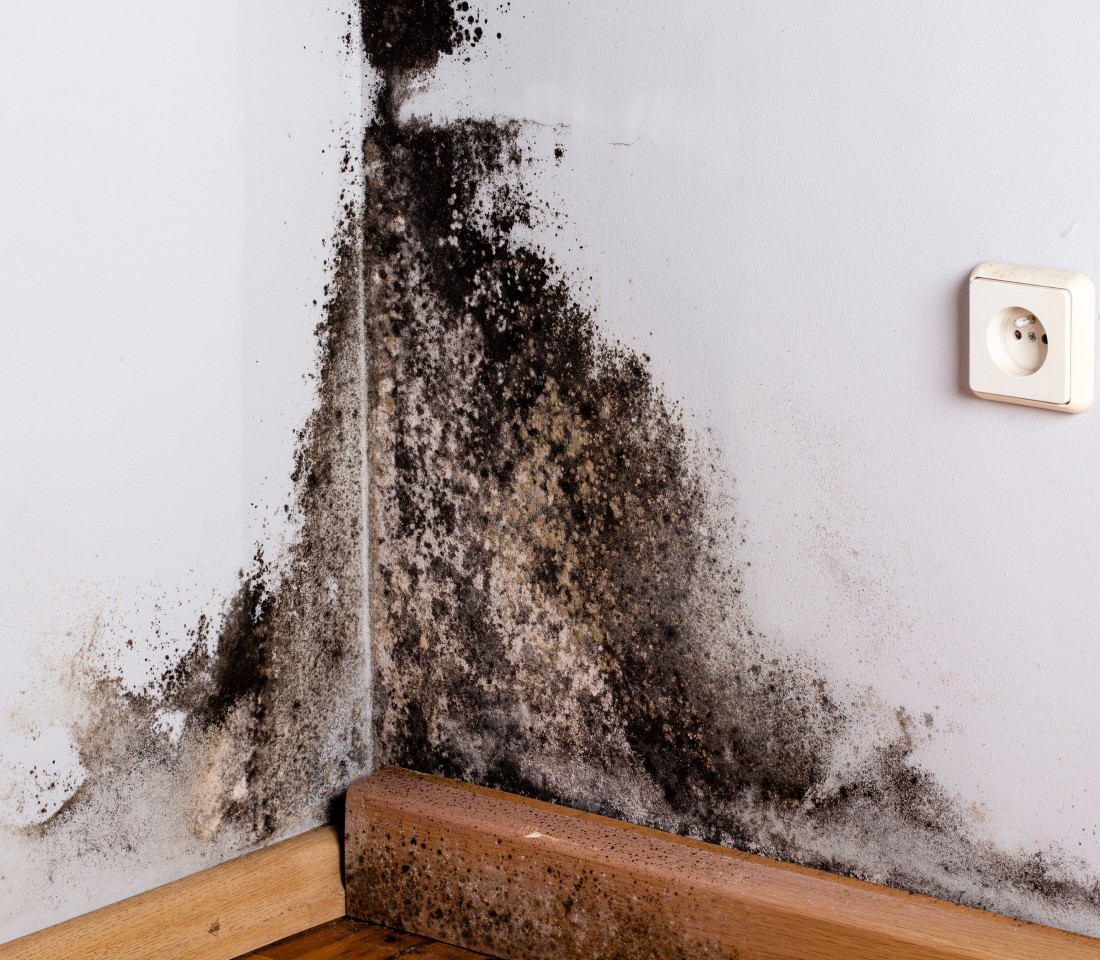
Mold Removal Is Only Part of the Solution
Mold is a symptom of an underlying moisture problem. It may be present after obvious flooding, but it can also develop from a slow pipe leak, condensation, poor ventilation, or damp building materials. If the source remains, mold problems can return even after the visible growth is cleaned.
Professional remediation goes beyond basic surface cleaning. Our goal is to identify the affected area, limit the spread of spores, remove materials that cannot be safely restored, apply appropriate antimicrobial treatments, and establish effective moisture control. When mold damage affects drywall, insulation, trim, flooring, or other parts of the structure, MJ White can also complete the repairs required to return your property to its pre-loss condition.
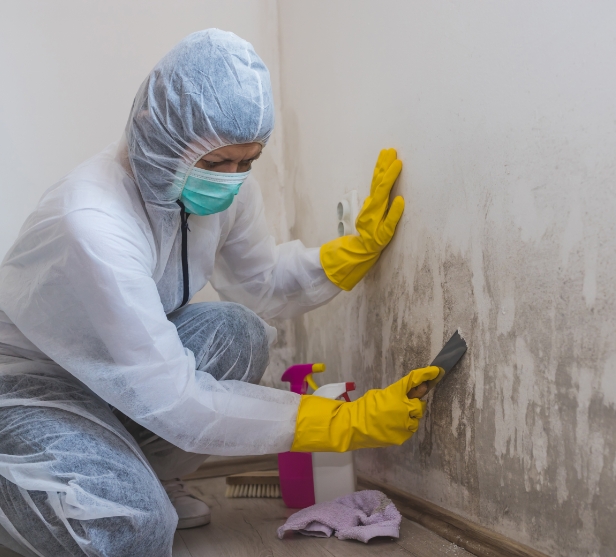
Signs You May Have a Mold Problem
Some indications are easy to recognize, while others remain hidden until the problem becomes significant. Contacting a restoration professional is important when any of the following conditions are present:
- Black, green, gray, white, or brown spotting on walls, floors, ceilings, or belongings
- A damp, earthy, or musty odor that does not go away
- Peeling paint, bubbling drywall, warped flooring, or stained ceiling materials
- Recent water damage from a roof leak, burst pipe, appliance failure, storm, or basement flood
- Condensation around windows, plumbing fixtures, or HVAC components
- Ongoing humidity or moisture in a basement, bathroom, attic, or crawl space
- Coughing, wheezing, nasal irritation, or similar symptoms that appear worse in a particular area
These signs do not define the type or full extent of a mold problem on their own. A professional assessment can help determine where mold is present, identify its likely source, and establish the appropriate remediation process.
Common Sources of Mold Growth in Novi Properties
Homes and businesses in Novi deal with changing temperatures, humid summers, heavy rain, snow, and frozen plumbing. These conditions can create moisture problems in both newer construction and established properties. Common sources include:
- Burst or frozen pipes
- Roof, flashing, or gutter failure
- Basement seepage and sump pump failure
- Flooding and storm related water damage
- Leaking water heaters, dishwashers, refrigerators, and washing machines
- Plumbing leaks behind walls or beneath cabinets
- Poor bathroom, kitchen, attic, or crawl space ventilation
- HVAC condensation and clogged drain lines
- Moisture trapped beneath flooring or inside wall cavities
Even a limited leak can lead to a larger problem when porous materials remain wet. Fast water extraction, structural drying, and moisture control can reduce the chance of mold growth and prevent additional damage.
Our Mold Remediation Process
Every property and mold problem is different. MJ White develops a remediation plan based on the source, location, affected materials, and extent of the damage. Our process generally includes the following steps.
 Property Assessment and Mold Inspection
We begin by discussing what happened and checking the areas where mold or moisture may be present. Our team looks for visible growth, water stains, damp materials, musty odors, and other indications of hidden damage. Moisture detection equipment can help us check walls, floors, ceilings, and other areas that may appear dry at the surface.
When a mold test or additional sampling is appropriate, we can discuss the next steps and how the results may play a role in defining the remediation plan. Testing is not a substitute for correcting visible mold growth or an established moisture source.
 Moisture Source Identification and Control
Successful remediation requires effective moisture control. We locate the source whenever possible and determine what must be corrected before restoration moves forward. Depending on the case, this may involve water extraction, structural drying, dehumidification, ventilation improvements, or coordination of repairs for a roof, pipe, appliance, or drainage failure.
 Containment of the Affected Area
Containment helps limit the spread of mold spores and dust to unaffected parts of the home or business. The measures required are based on the size, location, and severity of the problem. Our technicians may isolate the work area and use controlled air movement and filtration during removal.
 Mold Removal and Antimicrobial Treatments
Affected materials are evaluated to determine what can be cleaned and what must be removed. Nonporous and restorable surfaces may be carefully cleaned and treated. Porous materials with severe or significant contamination, such as drywall, insulation, or carpet, may require controlled removal. We use professional cleaning methods and antimicrobial treatments appropriate for the materials and conditions present.
 Drying, Cleaning, and Verification
The area is dried and cleaned so remaining moisture does not support new growth. Air filtration, dehumidification, and targeted air movement may be used as conditions require. Our team checks the treated area and confirms that the defined work has been performed before reconstruction begins. When the project calls for a clearance test, that test can be completed as part of the verification process.
 Repairs and Complete Restoration
Mold removal may leave walls, floors, ceiling materials, paint, trim, or cabinetry in need of repair. MJ White is a full service restoration and renovation company, so our work does not have to end after remediation. We can rebuild damaged areas and help return your property to a clean, functional condition.